
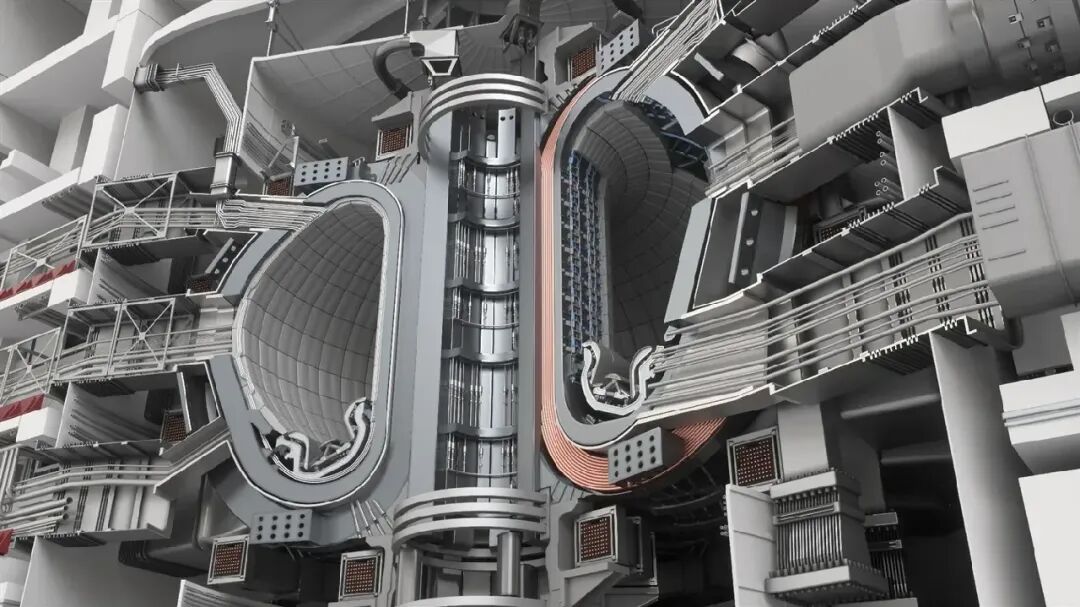
Recently, the Oak Ridge National Laboratory (ORNL), Cleveland Clinic, and IBM jointly announced that they have successfully simulated the molecular electronic structure of molten salt blanket materials for fusion reactors using a quantum computer for the first time. The related results have been published on the preprint platform arXiv.
This study validates a heterogeneous computing collaboration scheme that integrates quantum computing, artificial intelligence, and classical supercomputers, providing a new computational path for the design of key materials for fusion reactors.
Fusion Fuel Self-Sufficiency
Fusion reactions rely on tritium as a key fuel, yet tritium has almost no natural reserves on Earth. Currently, global annual production is only a few pounds, while a 1‑gigawatt fusion power plant could consume about one pound per day.
Future commercial reactors must continuously regenerate tritium during operation.
The liquid molten salt blanket (typically FLiBe) surrounding the tokamak is the core component responsible for this task—it absorbs fast neutrons, protects magnets, extracts heat, and simultaneously generates new tritium through neutron‑lithium‑6 reactions, enabling fuel recycling.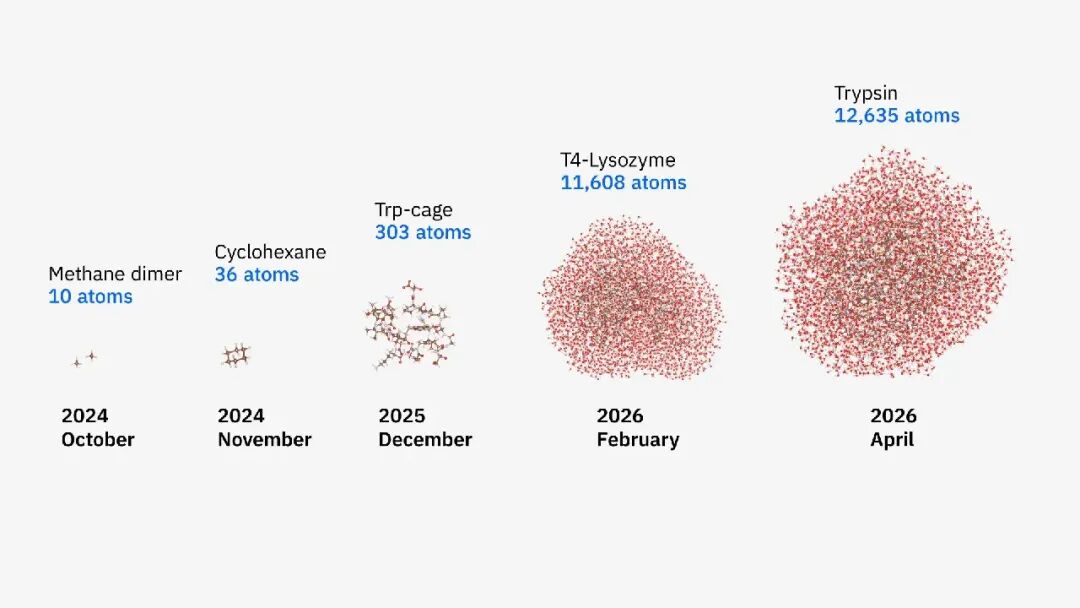 (Schematic diagram of changes in FLiBe molten salt system)
The Chemical Fate of Tritium Determines Molten Salt Material Suitability
Newly generated tritium has two possible paths in molten salt: combining with fluorine to form corrosive tritium fluoride, which increases recovery difficulty, or remaining as a gas that naturally escapes, making collection easier.
These two outcomes directly affect material selection. To accurately predict this process, precise characterization of electron distribution among atoms is required. Traditional density functional theory has an error of about 10% in free energy calculations for such systems, which is insufficient for engineering precision.
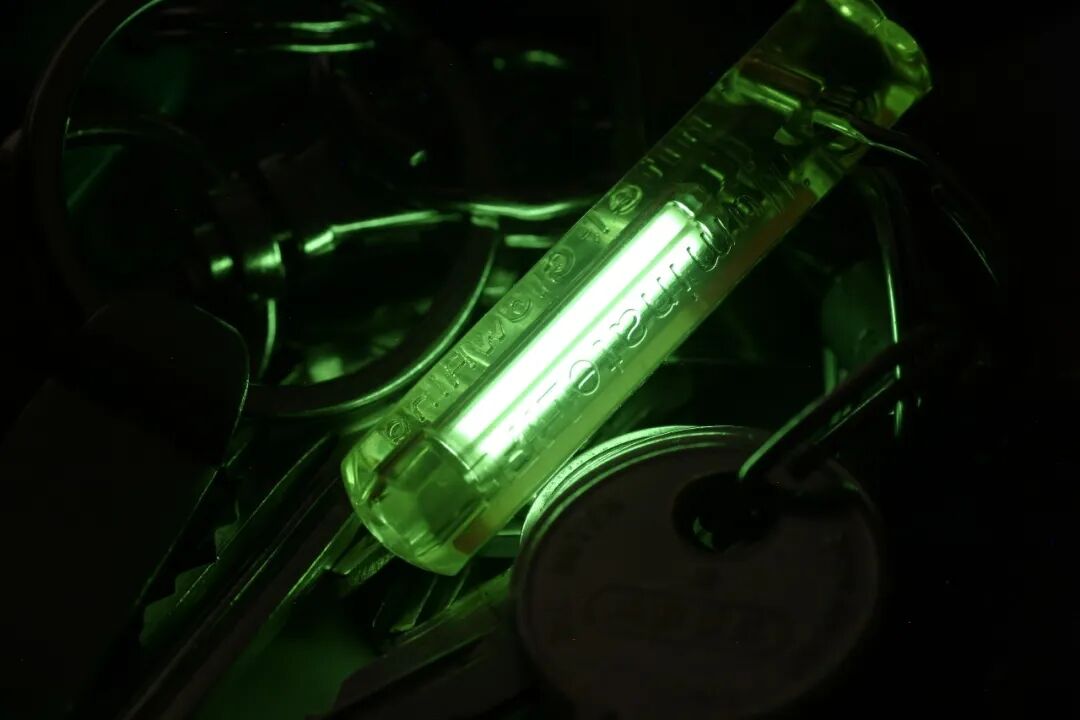
(Tritium)
Quantum‑Supercomputer‑AI Integration
The research team adopted IBM's "quantum‑centric supercomputing" framework, using wave function embedding to decompose the large system into multiple atomic fragments.
Classical computers handle the larger, less entangled parts, while quantum computers use an extended sample‑based quantum diagonalization method to solve the most complex electronic correlation regions.
Previously, the team had used the same method to complete a protein calculation involving 12,635 atoms.
In this study, nine typical configurations were extracted from FLiBe molten salt, each containing 21 ion clusters, and the system energies with and without tritium were calculated separately.
The results showed that the quantum hybrid method's calculations are highly consistent with the current state‑of‑the‑art classical fragment algorithms, with deviations within 0.7 kcal/mol, validating the feasibility of the technical approach.
From 21 Ions to a Real Reactor: Scale‑up Underway
The current simulation scale still lags far behind a real molten salt blanket (about 10²⁴ particles). The team plans to next expand the cluster size and increase configurations to hundreds, bringing the free energy calculations closer to the actual liquid environment.
As multiple experimental fusion reactors are being built worldwide, and quantum computing is still in its early stages, this study clearly demonstrates the paradigm for solving future complex scientific problems: AI for searching, supercomputing for simulation, and quantum computing for high‑precision solutions—three types of computing power integrated into a unified R&D process.
The "integration of quantum, supercomputing, and AI" is moving from concept to concrete practice, bringing new possibilities for fusion materials and beyond.