
Breaking News in Science! Major Breakthrough in Chinese Quantum Computing! Pan Jianwei's Team Invents an Indestructible Quantum Module
 B.news


Can you make a soap bubble last forever in a storm? Just now, Chinese scientists, using the "Zu Chongzhi-2" processor, have turned this theoretical scenario into reality!
This could be a seismic breakthrough in the field of quantum computing, pointing the way to building future super quantum computers that never break. On November 28, 2025, the prestigious international academic journal *Science* published this astonishing achievement by a team led by Pan Jianwei, Zhu Xiaobo, Peng Chengzhi, and Gong Ming from the University of Science and Technology of China: for the first time, they successfully "locked" quantum information in a superconducting quantum processor, creating a quantum module that "won't break no matter how much it shakes."
If you ask quantum scientists what they fear most, the answer is undoubtedly: noise.
While current quantum computers boast astonishing computing power, their computing modules—qubits—are incredibly delicate. Even the slightest heat, a wisp of electromagnetic wave, or even the weak vibration from a sneeze can cause them to instantly "collapse," rendering all the painstakingly calculated data worthless. This is called "decoherence" in physics.
To appease these "little devils," the traditional method is a "human wave" approach: using hundreds or even thousands of qubits to protect a single logic qubit. This is akin to building an armored vehicle specifically to transport an egg—outrageously expensive and incredibly inefficient.
Isn't there a way to make qubits themselves "thick-skinned"?
Pan Jianwei's team turned their attention to a mysterious field of mathematics—topology.
There's a famous anecdote in topology: to a topologist, a donut and a mug are the same because they both have a hole. No matter how you knead the dough (as long as you don't tear it), that hole will always remain.
This "knead-resistant" property is the stability we've been dreaming of!
Scientists think: if we could create a quantum material whose properties, like that "hole," depend only on the overall structure and are unaffected by local disturbances, wouldn't information be secure?
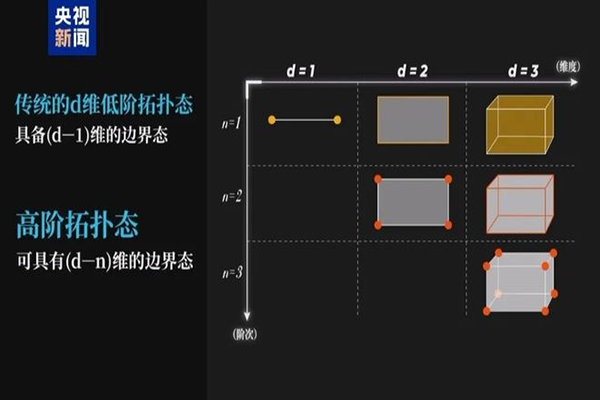
Previous research has found that some materials possess inherent "shake-resistant" properties at their edges. However, in this experiment, the Chinese team didn't want to limit themselves to the edges; they aimed for a more challenging approach—higher-order topological phases.
In simpler terms, they wanted to corner the quantum information and lock it in place.
But this is easier said than done. These special "higher-order non-equilibrium topological phases" are simply not found in naturally occurring materials! They are like a ghost defying common sense, requiring artificial creation.
Thus, the Zu Chongzhi-2 superconducting quantum processor came into play.
The research team utilized a 6×6 qubit array on the processor. This wasn't a simple permutation and combination; they applied extremely complex microwave pulses to these qubits, like weaving a vast spacetime web.
Here's a key statistic: they constructed over 50 cycles of Floquet operators.
If you don't understand the terminology, that's okay. You can think of it as an incredibly precise "quantum swarm dance." These qubits are pulsating wildly at a specific rhythm every microsecond. This dynamic, unbalanced dance surprisingly produces a strangely stable structure on a macroscopic scale.
A miracle has occurred.
In the torrent of data, scientists were astonished to observe that energy and information did not scatter and escape, but instead obediently gathered at the four corners of this two-dimensional grid.
These are the legendary "corner modes."
These four corners have become havens for quantum information.
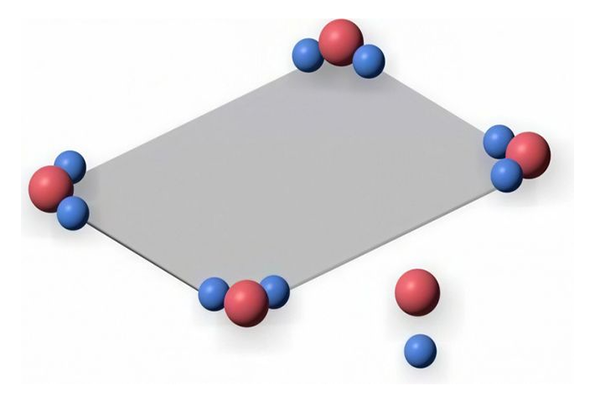
In this state, quantum information seems to acquire an invisible "protective shield." No matter how the central grid is disturbed, as long as the overall topology remains unchanged, the information hidden in the corners remains safe.
This is like moving a precious piece of porcelain from the center of a bustling living room to a corner of a safe protected by bulletproof glass. It remains unmoved regardless of external disturbances.
Reviewers of the journal *Science* were visibly excited upon seeing this result, praising it as a "significant improvement" from one-dimensional to two-dimensional and demonstrating "rich experimental capabilities." This proves that even with current, still noisy quantum processors, we still have the ability to create entirely new states of matter, even those not found in nature.
While we may still have a long way to go before building a perfect, error-free quantum computer, this research has opened a new door.
It tells us that besides relentlessly working on error correction algorithms, we can also start from the physical level and design inherently "resistant" quantum modules.
If future quantum chips can utilize this "corner mode" technology, quantum memory will no longer be a fragile soap bubble, but a sturdy building block. At that time, cracking encryption, designing new drugs, and simulating the evolution of the universe will no longer be dreams.
The Chinese team has once again proven that in exploring the uncharted territory of the microscopic world, the most powerful tools are often hidden within the most ingenious mathematical structures.
References:
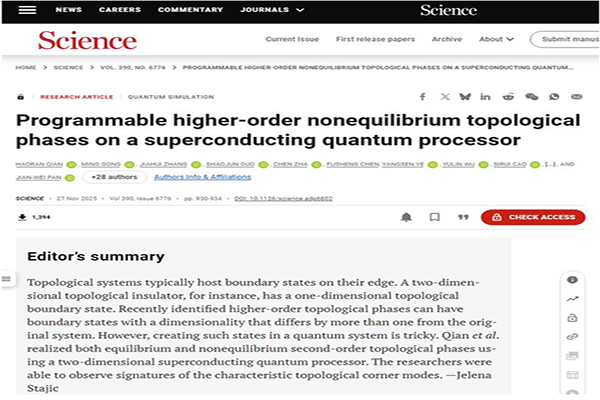
Qian, H., Gong, M., Zhang, J., et al., & Pan, J.-W. (2025). Programmable higher-order nonequilibrium topological phases on a superconducting quantum processor. Science, 390(6776), 930-934.