
From "Crash-Landing Iteration" to New Goals on an Earnings Call
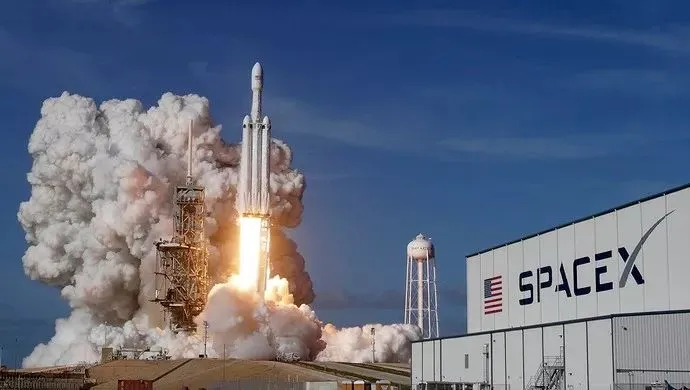
Starship's development has always been inseparable from the word "explosion." But it's precisely through the problems exposed in each test flight that SpaceX has gradually pushed this stainless-steel behemoth toward orbit. After 13 previous flight tests, Starship has already completed multiple "chopstick" catches of its booster—but the upper stage, the 50-meter-plus spacecraft itself, has yet to be caught by the tower.
On August 5, SpaceX held its first quarterly earnings call.
That in itself is a signal: the company is transitioning from "burning cash on R&D" to a "revenue-generating transportation service provider." On the call, Musk proactively updated Starship's timeline, laying out the goals for the 14th test flight in more specific terms than ever before.
Three Firsts, One High-Stakes "Mid-Air Handshake"
The 14th test flight is scheduled for late August. This mission includes three "firsts": the first orbital deployment of payload, the first attempt to catch the upper stage with the launch tower's mechanical arms, and the first time the recovery target is locked in at the 52-meter class.
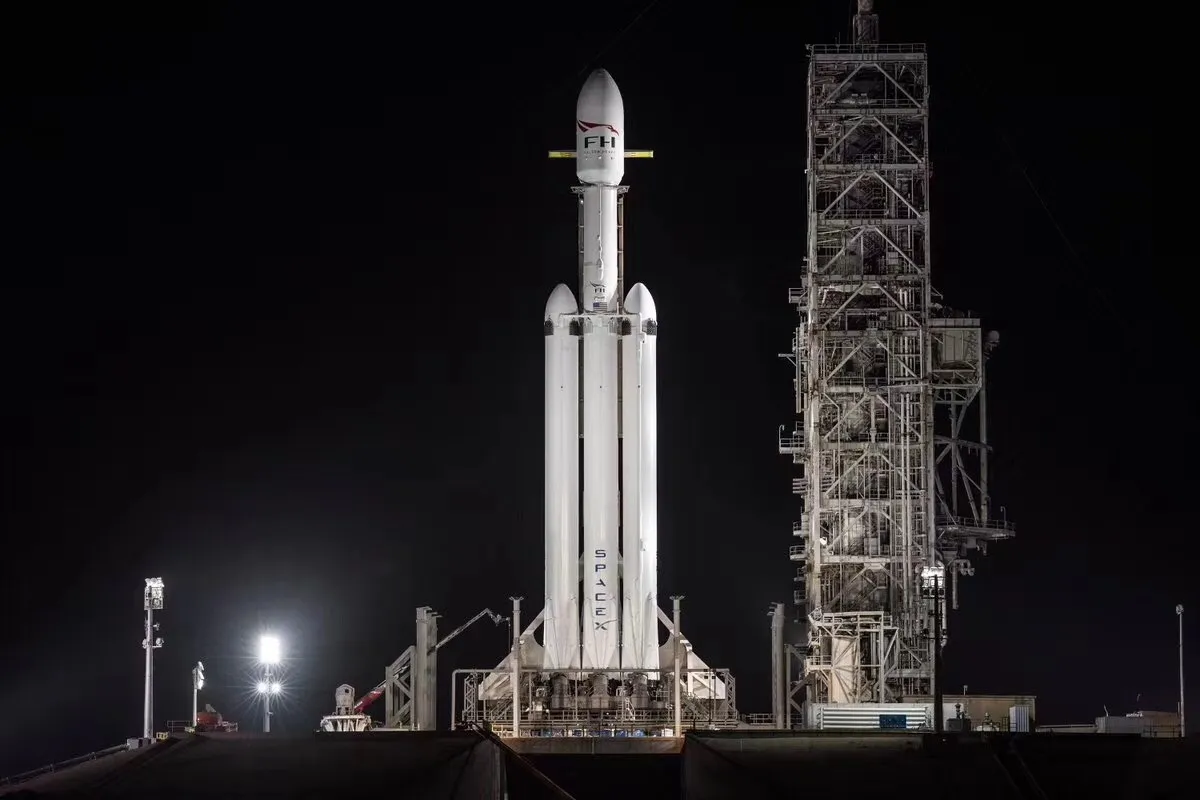
Specifically, Starship remains a two-stage design: the Super Heavy booster below provides the thrust to punch through the dense atmosphere, then separates for a conventional ocean or tower landing; the second stage above (the spacecraft itself) continues firing to deliver its payload to orbit. But what's different this time is that after completing its mission, the spacecraft won't splash down—it will decelerate at a specific orbital altitude, adjust its attitude, fly back to the launch site, and let the tower's mechanical arms "catch" it in mid-air.
This is far harder than recovering the booster. Because the upper stage returns in a near-vacuum environment, with no atmospheric drag to slow it down, it relies entirely on its own engines for precise retro-propulsion. At the same time, it's traveling faster and from a higher altitude, and the capture window for the mechanical arms may be only a few seconds. SpaceX engineers mentioned offhand that the success rate for this attempt isn't 100%, but the data collected matters more than a binary pass-or-fail outcome.
Cost, Frequency, and the Deep-Space Logic
If this upper-stage recovery succeeds, the closed loop for reusable rockets will truly be complete. Previously, Falcon 9 could only reuse its first stage—the upper stage was expendable. But Starship is designed for full reusability of both stages, meaning the hardware loss per flight can be reduced to just fuel and refurbishment costs. Musk ran the numbers on the call: with high enough launch frequency and enough reuse cycles, the per-flight cost could drop by an order of magnitude below Falcon 9.
On flight frequency, he made an aggressive forecast: achieving "one launch per day"—or even higher—within a year. That claim needs to be unpacked. On one hand, SpaceX has already built multiple launch towers in Boca Chica, Texas, to support rapid turnaround; on the other hand, a successful upper-stage recovery would greatly simplify refurbishment processes. But "daily launches" isn't just a technical challenge—it also involves airspace coordination, payload scheduling, and weather windows. Given SpaceX's track record, this timeline reads more like internal motivation than a firm commitment to the public.
The deeper impact lies in deep-space missions. Upper-stage recovery technology directly affects the economics of lunar and Mars missions—because those require multiple in-orbit refueling operations, and each refueling depends on a separate Starship launch. If every launch consumes a new spacecraft, the cost is unsustainable. Only when the upper stage can also be reused do large-scale lunar bases or Mars colonization plans become mathematically viable.
What This Test Flight Means
First, satellite launch costs will continue to fall. If Starship achieves full reusability of both stages, the per-kilogram launch price could drop below Falcon 9's current levels. That would spur more low-Earth-orbit internet, remote sensing, and even in-space manufacturing projects—ultimately feeding back to end users as cheaper broadband and richer geospatial data services.
Second, the timeline for space tourism could move up. Upper-stage recovery validates whether "the spacecraft can safely return"—a prerequisite for crewed missions. If Flight 14 succeeds, SpaceX clears a major technical hurdle on the path to "sending people around the Moon" or "sending people to orbit." Of course, crewed missions still require additional life-support and escape-system validation, but recovery is the fundamental building block.
Overall, the 14th test flight is not just another iteration—it's a turning point in Starship's transition from "being able to fly" to "being able to make money." Musk described it on the earnings call as "one of the most important flights of the year." As for whether those few minutes of mid-air capture at the end of August will succeed, we'll just have to wait for the actual footage. But one thing is certain: success or failure, SpaceX will gather enough data from this attempt to keep pushing forward.