

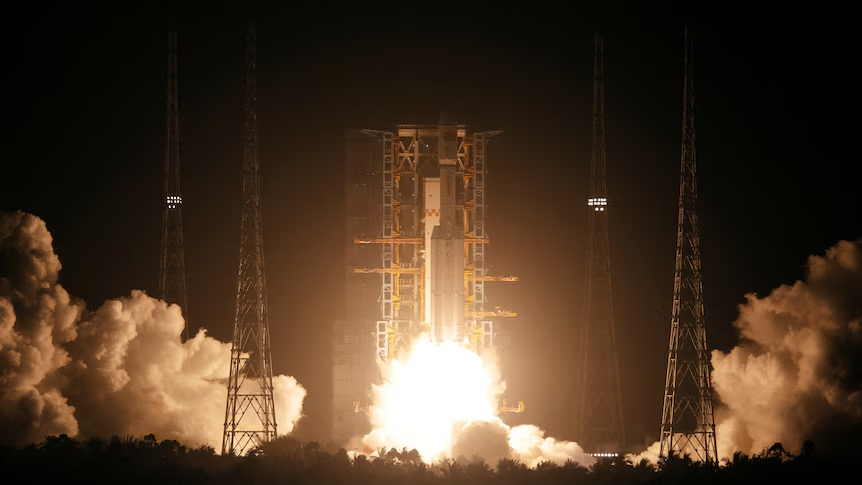
At 8:02 p.m. on August 10, China launched a Long March 7A carrier rocket (Long March 7A Y16) from the Wenchang Space Launch Site in Hainan, carrying the Zhongxing-4B satellite.
Approximately 85 seconds after liftoff, the rocket encountered a sudden anomaly during first-stage flight, subsequently breaking apart and exploding. The launch mission was declared a failure.
85 Seconds: From Liftoff to Explosion
According to an official report released by Xinhua News Agency at 11:15 p.m. that evening, the rocket experienced an anomaly during flight, resulting in the failure of the mission. The specific cause remains under investigation.
Based on videos recorded by amateur observers and publicly available launch-tracking data, the rocket appeared to perform normally during the initial phase of ascent. At approximately T+85 seconds, however, the vehicle suddenly disintegrated and exploded. A massive orange-red fireball and cloud of debris briefly illuminated the night sky, and the satellite failed to reach its intended orbit.
The accident occurred during a phase of flight typically associated with high aerodynamic loads. Spaceflight enthusiasts have focused particular attention on whether the failure occurred near the vehicle’s point of maximum dynamic pressure, commonly known as “Max Q.” However, no publicly available telemetry data currently confirms whether the rocket was precisely at Max Q when the accident occurred.
Launch Vehicle Background: Another Failure After Six Years
The Long March 7A is a new-generation medium-lift liquid-propellant launch vehicle developed by the China Aerospace Science and Technology Corporation (CASC) as an upgraded derivative of the Long March 7 platform. The rocket stands 60.1 meters tall and has a liftoff mass of approximately 573 metric tons. It is primarily designed for missions involving satellites bound for geosynchronous orbits.
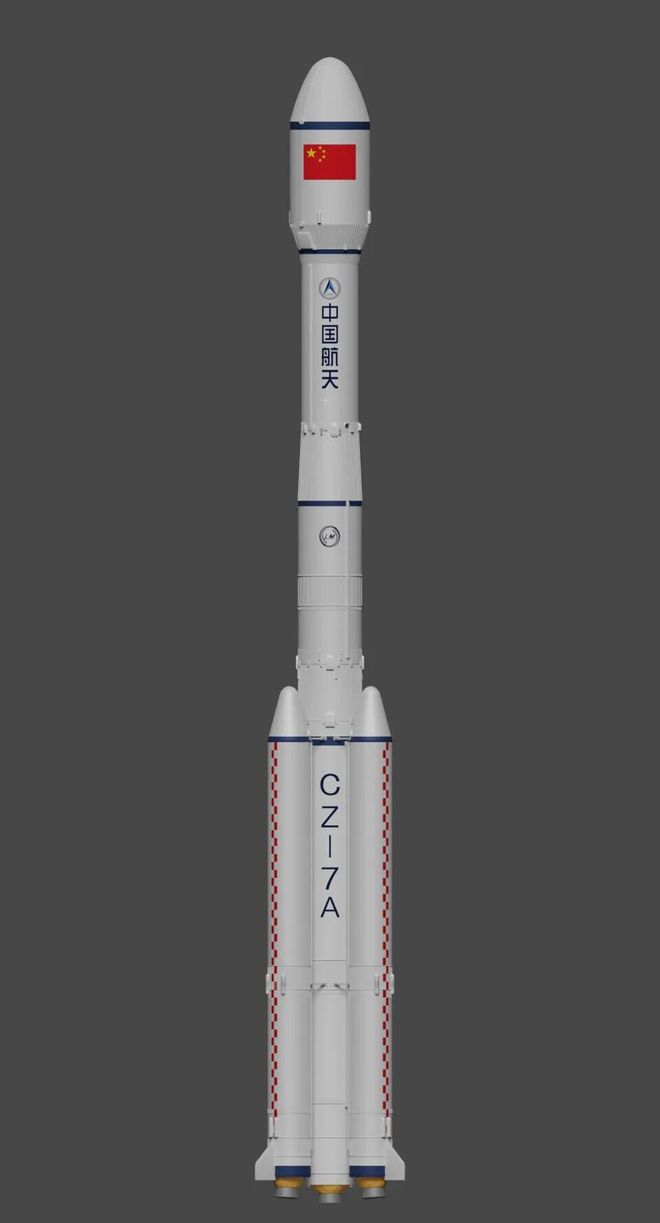
Prior to this mission, the Long March 7A had maintained a record of 16 consecutive successful high-orbit launches. Its most recent successful mission took place on July 29, 2026, when it successfully placed the Tianlian-3 01 satellite into its designated orbit.
The launch vehicle’s reliability record, however, has not been flawless. Its maiden flight on March 16, 2020, also ended in failure. That accident was attributed to a cavitation-related problem in the liquid-oxygen system of one of the boosters. The loss of Zhongxing-4B therefore marks the second failure in the history of the Long March 7A program.
Payload: Zhongxing-4B Military Communications Satellite
The payload for this mission was the Zhongxing-4B satellite, part of China’s Zhongxing communications-satellite series.
Satellites in the Zhongxing family are primarily used for television broadcasting and data transmission services, providing coverage across China and the wider Asia-Pacific region.
External observers generally believe that lower-numbered Zhongxing satellites are primarily intended to support national-defense communications. Zhongxing-4A, a satellite from the same series, was successfully launched into geostationary transfer orbit by a Long March 7A on August 22, 2024.
China’s Fourth Orbital Launch Failure of 2026
The failure marks China’s fourth unsuccessful orbital launch attempt of 2026.
For China’s space sector, which is currently operating at a high launch cadence, the incident serves as a significant reminder of the inherent risks involved in spaceflight. Space exploration has never been without setbacks; failures are an enduring reality of the aerospace industry and an inevitable part of technological development and iteration.
The cause of the accident remains under investigation. Neither the China Aerospace Science and Technology Corporation nor the China Academy of Launch Vehicle Technology has yet released a detailed technical explanation.
Chang’e-7 Launch Schedule Draws Attention
Under the original schedule, China’s Chang’e-7 robotic lunar exploration mission is expected to launch aboard a Long March 5 rocket in approximately two weeks.
On July 13, 2026, the Long March 5 Y14 launch vehicle assigned to the mission was safely transported to the Wenchang Space Launch Site.
The Chang’e-7 mission will comprise an orbiter, a lander, a lunar rover and a small “hopping probe.” Its primary destination is the vicinity of Shackleton Crater near the Moon’s south pole. If successful, the mission would mark the first time a lunar rover has been deployed to this region.
Whether the Long March 7A failure will affect the planned launch schedule for Chang’e-7 remains unclear. No official announcement has yet been made, and any potential impact will depend on subsequent technical assessments and the findings of the ongoing investigation.