

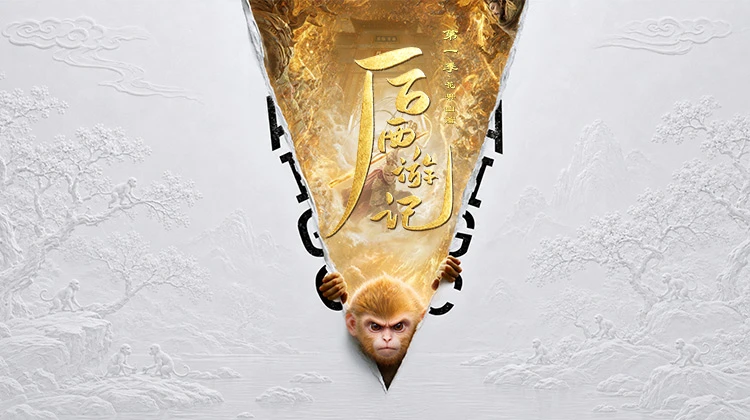
On August 31, China’s first AIGC long-form drama to be broadcast on a satellite TV channel, The Later Journey to the West, officially premiered. The series became available on Mango TV from 6 p.m. and entered Hunan Satellite TV’s prime-time lineup at 8 p.m. that evening.
Produced by Mango TV, the entire series was created using its proprietary AIGC production platform, “Mango Lingchuang,” and adopts an innovative model that combines production, review and broadcasting.
A Sequel to a Classic IP With a New Generation of Journey to the West Characters
The series is adapted from the same-named fantasy novel, one of the three major sequels to Journey to the West written during the late Ming and early Qing dynasties. It is not a remake of the original classic.
The story takes place 1,080 years after Sun Wukong was canonized. After the Buddhist scriptures are lost and subsequently misinterpreted, a new stone monkey from Flower Fruit Mountain, Sun Xiaosheng, sets out on a second journey westward to retrieve the scriptures.
The first season consists of 30 episodes, with each episode running approximately 40 minutes. The first five episodes, forming the “Flower Fruit Mountain” arc, were released first.
From “AI Random Generation” to a More Controlled Production Process
The series features no human actors or live-action footage. Every visual is AI-generated, with the production team aiming to create an aesthetic rooted in traditional Chinese visual culture.
Using the Mango Lingchuang platform, the production team created digital assets for 109 characters and 143 settings, turning AI generation into a more controlled and structured professional production process.
According to industry estimates, AI-powered film and television production can reduce scene-building costs by around 85%, while significantly shortening both production cycles and costs compared with traditional live-action dramas.
“Produce, Review and Release as You Go” Reshapes the Production Pipeline
Following the release of China’s “21 Broadcasting and Television Measures,” the series is being positioned as the country’s first drama to adopt a model in which production, review and broadcasting take place simultaneously.
The approach can shorten the review process from several months to several weeks or even days.
It not only reduces the time between content creation and release, but also allows production teams to dynamically refine details based on review requirements and audience feedback.
For streaming and broadcasting platforms, the model could also provide greater scheduling flexibility and accelerate the supply of new content.
Strong Premiere Ratings Send AI Stocks Higher
According to Hunan Satellite TV, the drama’s real-time ratings during its premiere ranked first among provincial satellite TV channels in the same time slot, with a market share exceeding 1.5%.
Following the news, Mango Excellent Media hit the daily 20% limit in mainland China’s stock market. Other AI-related stocks, including Chinese Online and Kunlun Tech, also posted significant gains.
Industry observers said the series marks another step toward bringing AI-generated content into the mainstream television system. The AI entertainment industry could continue expanding along a path from short-form content validation to large-scale long-form production.