

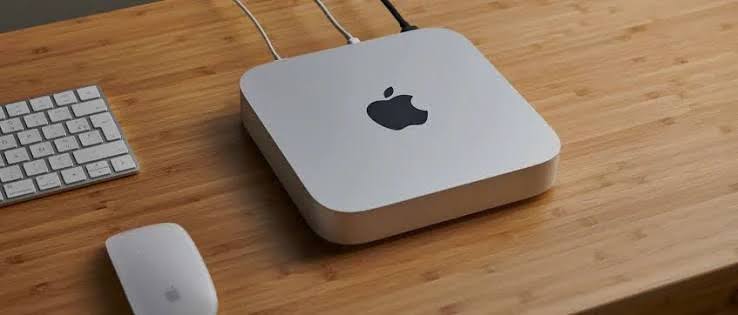
Over the past few months, OpenAI quietly completed a hardware purchase of unusual scale: tens of thousands of Mac minis and Mac Studios were shipped directly into the company's data centers, becoming dedicated machines for training "computer-use agents." These units are all bare-bones versions with no display or keyboard — no human-facing interface is needed, they just need power and a network connection to run around the clock, providing AI with a genuine desktop operating environment.
What makes this purchase worth paying attention to isn't the dollar amount, but the fact that it breaks a long-standing assumption: that Nvidia GPUs are the only thing on an AI lab's hardware shopping list. For the first time, Apple's consumer-grade computers have entered the core of frontier AI training at a scale of tens of thousands of units.
Computer-Use Agents: Teaching AI to Operate a Computer Like a Person
To understand why OpenAI needs so many Macs, you first need to understand what it's actually training.
A computer-use agent is a different beast from the large language models we chat with every day. An ordinary large model outputs text — it operates in a "language space." A computer-use agent outputs actions instead — moving the mouse, clicking icons, typing text, switching windows, opening a browser, filling out forms, editing documents. It operates in an "action space" to complete real tasks.
Here's an example. Tell an ordinary large model "book me a flight to Shanghai tomorrow," and it will tell you which website to open, how to search, how to pay. A computer-use agent, on the other hand, will actually open the browser, go to the booking site, enter the origin and destination, select a flight, fill in passenger details, and carry the process all the way through to the payment page. It isn't "telling you how" — it's "doing it for you."
Training this kind of agent relies on reinforcement learning. In simple terms, the AI is dropped into a real operating-system environment, given a task goal, and left to try out different combinations of actions on its own. Correct actions earn a positive reward; wrong actions or failed tasks earn negative feedback. Across thousands upon thousands of trial-and-error attempts, the AI gradually learns which sequences of actions efficiently complete a task and which lead nowhere.
This process is fundamentally different from training a large language model. Pretraining a large model means feeding in massive amounts of text and having the model predict the next word — the core bottleneck is compute density. Reinforcement-learning training for agents, by contrast, requires large numbers of independent environment instances running at the same time, with the AI inside each one exploring and collecting feedback independently — the core bottleneck is the number of parallel environments and memory capacity.
Why Mac, and Not a Traditional GPU Cluster
That raises the key question: training massive models runs on Nvidia GPUs, so why not keep using GPU clusters to train computer-use agents — why buy tens of thousands of Macs instead?
The answer lies in the fact that these two kinds of training tasks have completely different hardware requirements.
Pretraining a large model is bottlenecked by compute. Model parameters number in the hundreds of billions, and every forward and backward pass involves enormous matrix operations — exactly what GPUs are built for. Connecting thousands of Nvidia GPUs through a high-speed interconnect into one massive compute cluster is what makes training possible within a reasonable timeframe. In this domain, Nvidia's CUDA ecosystem and hardware design remain the undisputed ruler.
But training a computer-use agent is bottlenecked by memory and environment isolation, not compute.
The reinforcement-learning training loop roughly works like this: a large number of agent instances simultaneously execute tasks in their own desktop environments, collecting state, action, and reward data; that data is aggregated and used to update the model's parameters; the updated model is then redeployed to each instance for the next round of trial and error. In this loop, the most time-consuming part is usually not the model update itself, but the agent "running the task" inside the environment — because desktop operations carry inherent latency: opening an application, loading a webpage, waiting for an interface to respond all take real time.
That means the most direct way to improve training efficiency isn't to boost the compute power of a single machine, but to increase the number of environment instances running in parallel. What you need is a large number of independent, small machines each capable of running a complete desktop environment — not one supercomputer with all its compute concentrated in a single place.
Apple silicon's unified memory architecture happens to fit this scenario well. In a traditional x86 PC, the CPU and GPU each have their own separate memory, and moving data between the two requires copying — which costs both time and bandwidth. Apple's M-series chips, on the other hand, integrate the CPU, GPU, and neural engine onto a single chip that shares one pool of unified memory. For a mixed workload like running a desktop environment alongside AI model inference, data doesn't need to be shuttled back and forth between separate memory pools, which means lower latency and higher efficiency.
More importantly, a Mac mini or Mac Studio is a complete computer in its own right. Plug in power and a network cable, and a Mac mini is an independent macOS desktop environment that can directly run agent training tasks — no extra virtualization layer required, no multi-tenant environment-isolation problem to solve. Tens of thousands of Mac minis packed into a data center become tens of thousands of independent training environments. That "ready out of the box" quality has real appeal for reinforcement-learning training that needs environments running in parallel at scale.
To be clear, this doesn't mean Mac is "better" than GPUs — it means that in this particular training scenario of computer-use agents, the Mac's architecture and product form factor happen to match the requirements. It's a case of "the right tool for the right job," not a story of "Apple beats Nvidia."
Anthropic: Skipping the Purchase, Choosing Cloud Rental Instead
Not every AI lab has chosen the same hardware path.
Anthropic is also using similar Mac hardware for reinforcement-learning training of computer-use agents, but instead of buying equipment in bulk, it rents Mac mini capacity through Amazon Web Services. It rents as much as it needs and releases the capacity once a task is done, without taking on the cost and risk of purchasing, shipping, deploying, and maintaining hardware.
These two paths represent two entirely different hardware strategies.
OpenAI's approach is asset-heavy, build-it-yourself. Buying tens of thousands of units up front means a large initial outlay and significant depreciation pressure, but the payoff is lower long-run usage costs, fully controllable equipment, and the ability to customize the data-center environment and network configuration to its training needs — without worrying about a cloud provider's capacity limits or price swings. For a team that has already committed to computer-use agents as a long-term strategic direction, with training work expected to continue for years, building in-house may end up cheaper overall.
Anthropic's approach is rent-as-needed. There's almost no upfront hardware investment, and flexibility is high — rent more when there's more training work, rent less when there's less, and resource utilization can be kept very efficient. The downside is that, over the long run, the per-unit cost of cloud compute is typically higher than owning hardware outright, and the approach is constrained by how much Mac capacity the cloud provider can actually supply — AWS's supply of Mac instances is itself limited, and there may not be enough instances available for large-scale parallel training.
Neither strategy is objectively better than the other — the choice largely comes down to each company's scale, financial position, and strategic judgment. But the fact that both paths exist says something on its own: AI labs are starting to diversify their hardware procurement, and it's no longer a given that everyone buys nothing but Nvidia GPUs. Different training tasks call for different hardware, different teams have different cost structures, and the diversification of the hardware market may only just be getting started.
Bulk Orders Rattle the Consumer Market, New Macs Fall Into Short Supply
The ripple effects of this large-scale purchase quickly reached the consumer market.
On August 25, Apple had just refreshed its Mac mini and Mac Studio lineup. The new generation is built on Apple's first chip on a 2-nanometer process, the M6, alongside M5 Pro, M5 Max, and M5 Ultra configurations. The 2-nanometer process brought gains in both performance and efficiency, and expectations — and demand — were already high right out of the gate.
Not long after the refresh, the lineup ran straight into OpenAI's purchase at industrial scale. With tens of thousands of high-end configurations scooped up by an AI lab, supply to the consumer market was inevitably squeezed. Ordinary customers who placed orders saw wait times stretch out, and some high-end configurations even fell into prolonged stock-outs.
Tim Cook has already stated publicly that the shortage of high-end configurations is expected to continue for months. In practice, that means anyone hoping to buy the latest high-spec Mac mini or Mac Studio may need to wait until the end of the year or later.
Interestingly, this wave of bulk orders from AI labs has also given Apple's Mac business an unexpected boost. Mac revenue rose 29% year-over-year last quarter — a striking growth rate against the backdrop of a broader consumer-electronics market with sluggish growth. Bulk purchases by AI labs have become a meaningful driver of that Mac revenue growth.
For Apple, this could be a signal worth taking seriously. The Mac lineup has long been positioned around consumers and professional creators; bulk purchases by AI labs are a first. If demand for training computer-use agents keeps growing, more AI labs may join the ranks of Mac buyers going forward, and the Mac business could gain an entirely new B2B growth curve.
What This Means for Nvidia — Is It at Risk of Being Replaced?
OpenAI's large-scale Mac purchase has quickly been folded into the bigger debate over whether Nvidia can keep dominating on its own.
Inside Nvidia, Apple is reportedly already viewed as a primary competitor in on-device AI processing. That view isn't baseless — the neural engine in Apple's M-series chips keeps getting better year over year, the unified memory architecture genuinely offers advantages in certain AI inference scenarios, and Apple controls full-stack optimization from chip to operating system. If more AI workloads shift to running on local devices in the future, Apple could well take a real slice of the pie.
That said, it's worth being clear: none of this means Apple silicon can replace Nvidia's position in large-model pretraining.
From a technical standpoint, Apple silicon is better suited to inference and fine-tuning of mid-sized models. In those scenarios, the demand for raw single-precision compute isn't as extreme, and the workload is more sensitive to memory bandwidth and latency — conditions where the unified memory architecture's advantages can actually show up. But training frontier-scale massive models requires extremely high density of half-precision or even lower-precision compute, and thousands of GPUs interconnected at high speed into a supercomputing cluster. That remains Nvidia's core stronghold, and there's no realistic prospect of Apple silicon replacing it in the near term.
A more accurate way to describe this shift: not every dollar of AI compute spending has to flow to Nvidia anymore.
For the past several years, AI labs poured almost their entire hardware budget into Nvidia GPUs, because large-model pretraining was the only core task that mattered, and Nvidia was the only one that could do it well. But as AI technology has developed, training tasks have started to diverge: large-model pretraining still needs GPU clusters, but reinforcement-learning training for computer-use agents is better suited to Mac, model inference can run on dedicated inference chips, and edge AI can run on mobile chips. Different tasks call for different hardware, and AI labs are starting to spread their budgets across different types of hardware based on the nature of each training task.
For Nvidia, this isn't a fatal blow, but it is a shift worth taking seriously. Nvidia's core business — large-model pretraining — remains solid, and as models keep growing in scale, that market keeps expanding too. But the incremental growth in the AI compute market no longer belongs 100% to Nvidia. Apple, AMD, Google's TPUs, and a range of purpose-built AI chips are each carving out a slice in the scenarios where they fit best.
Zooming out, this could mark the starting point of the AI hardware market's shift from "one company dominates" to "multiple players coexist." For the industry as a whole, a more diversified hardware supply means lower supply-chain risk, fuller competition, and more reasonable pricing — with AI developers and users ultimately the ones who benefit. And for Nvidia, how to defend its core strengths while fending off competition coming from every direction will be the most important strategic question of the next few years.