

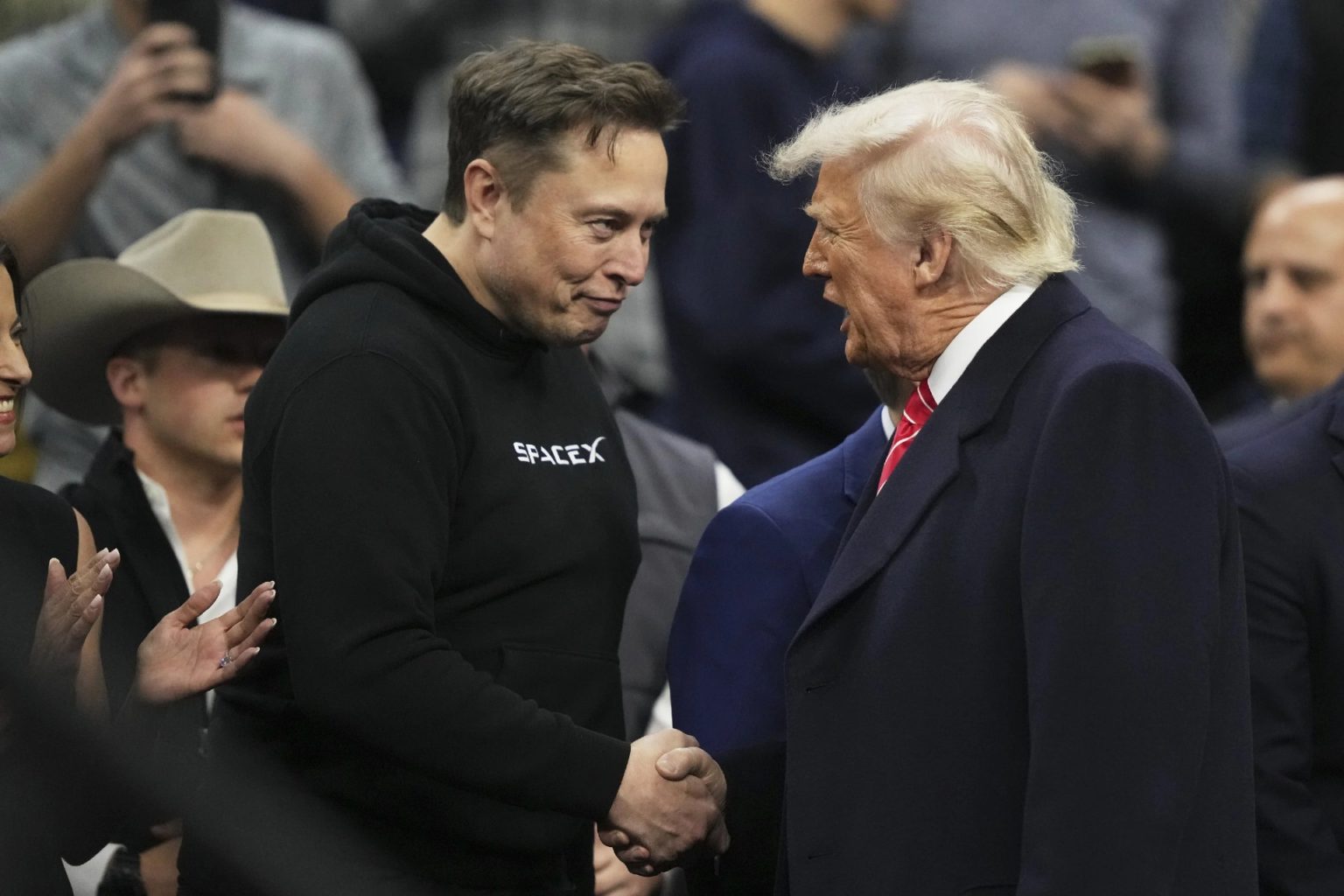
According to a report first published by Fox News and later confirmed by the White House, the other recipients of the National Medal of Science alongside Musk are Google co-founder Sergey Brin, Nvidia CEO Jensen Huang, and AMD CEO Lisa Su. Dell Technologies CEO Michael Dell and Microsoft CEO Satya Nadella will receive the National Medal of Technology and Innovation.
“The Trump administration is grateful for the contributions of these distinguished technology leaders,” White House spokesperson Liz Huston said in a statement. “The honorees have helped America maintain its position as the global leader in innovation.”
From a “Disgusting Abomination” to the White House Podium
Musk’s award marks a dramatic reversal in his relationship with Trump.
In the summer of 2025, after leaving the Department of Government Efficiency, Musk publicly denounced Trump’s signature tax-and-spending bill as a “disgusting abomination.” The two had a highly public falling-out, and Trump at one point threatened to terminate Musk’s government contracts. Their relationship has gradually improved since then.
Musk has recently reappeared at Trump’s side, including at a meeting with Chinese President Xi Jinping. He has also returned to an advisory role at the White House, co-leading the Pentagon’s “Project Meridian,” which is examining the future of warfare and the technologies the U.S. military will require.
According to The Hill, all the honorees have supported Trump or Republican causes in various ways. Musk was the largest individual donor to Trump’s 2024 presidential campaign. Brin made substantial donations to the Republican National Committee in 2025 and attended Trump’s second inauguration.
A Scientific Honor Breaks Out of Academia
The National Medal of Science has a history spanning more than six decades. Established by Congress in 1959 and first awarded by President John F. Kennedy in 1963, it is the United States’ highest honor for scientists and engineers. The National Medal of Technology and Innovation was established in 1980 and first presented by President Ronald Reagan in 1985.
Notably, for most of the past six decades, both medals have primarily been awarded to university researchers. Kennedy presented the first National Medal of Science to pioneering aerodynamicist Theodore von Kármán. Subsequent recipients have included Claude Shannon, the founder of information theory; Barbara McClintock, who discovered “jumping genes”; and Richard Feynman, one of the architects of quantum electrodynamics.
This time, however, all four recipients of the National Medal of Science are corporate leaders. Their companies—Tesla, SpaceX, Google, and Nvidia—have all made major bets on the computing infrastructure that powers AI.
By bestowing its highest scientific honor on people who build products and computing capacity, the White House is signaling its belief that companies and industry are beginning to lead the frontiers of science.
Trump also has a personal connection to the award. His uncle, John Trump, a professor of electrical engineering at the Massachusetts Institute of Technology, received the National Medal of Science in 1983 for his pioneering work on the use of high-voltage accelerators in cancer radiation therapy.
The “Science: The Golden Age” Summit and the Genesis Mission
The awards ceremony took place during the White House’s “Science: The Golden Age” summit. The event’s name was drawn from a report submitted to Trump in July by White House science and technology adviser Michael Kratsios, focusing on U.S. progress and research priorities in artificial intelligence.
Behind the summit lies a much larger AI research initiative from the Trump administration: the “Genesis Mission.”
Launched through an executive order signed by Trump in November 2025, the initiative has expanded into a cross-government national program involving more than 15 federal agencies across such fields as energy, health, transportation, space, and agriculture. According to a White House announcement in July, the federal government will invest more than $5 billion to advance the use of AI in scientific research.
The summit will also unveil more than $1 billion in new commitments to advance AI under the Genesis Mission. This includes $100 million in computing credits from the “National Compute” initiative, intended to give smaller laboratories and companies access to computing resources that are otherwise difficult to obtain from major AI firms.
From a public falling-out to an award ceremony at the White House, and from university laboratories to corporate boardrooms, Musk’s appearance on the podium represents both the repair of his relationship with Trump and a concentrated display of the administration’s AI narrative: computing power, industry, and political authority are being publicly bound together under the banner of the White House.