

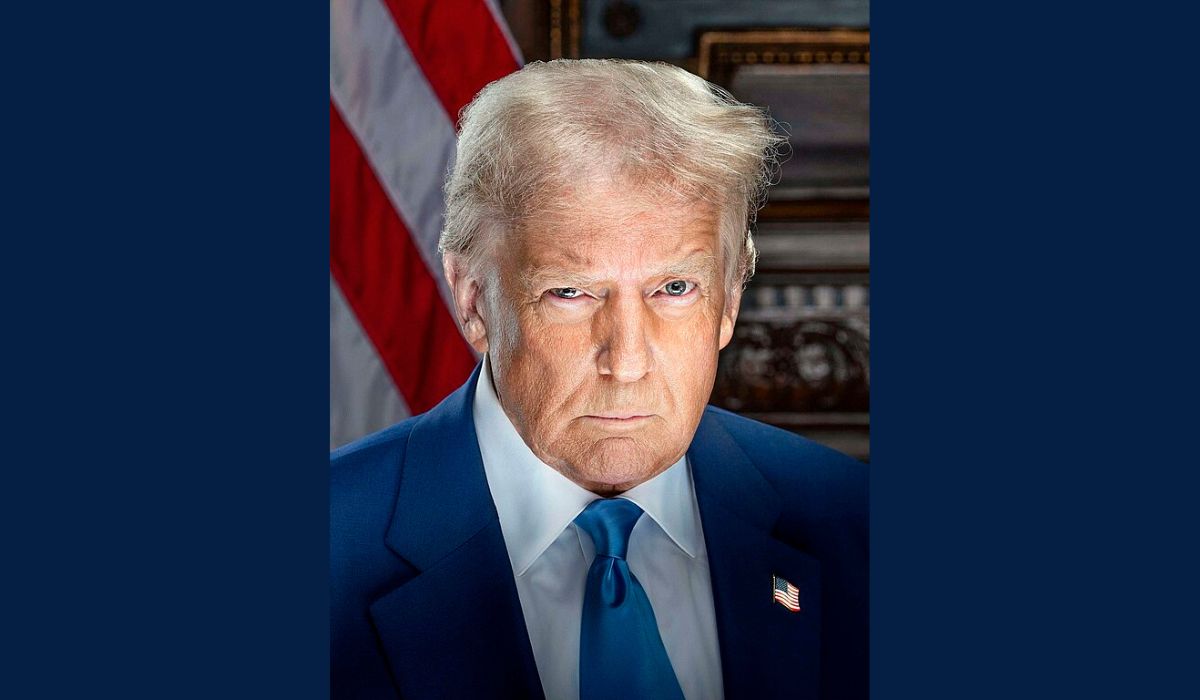
According to Business Insider on October 10, Salesforce CEO Marc Benioff announced that the company would rename its AIForce platform SIForce. Earlier, Musk also indicated that SpaceXAI would be renamed SpaceXSI. Both moves came amid Trump’s push to replace “Artificial Intelligence” (AI) with “Super Intelligence” (SI).
The initiative began on September 29, when Trump signed Executive Order 14434. It directs U.S. federal executive departments, to the extent permitted by law, to use “Super Intelligence” instead of “Artificial Intelligence” in official communications, websites, reports, and policy documents. The order also calls for proposed legislative language within 60 days to explore establishing a federal definition of super intelligence.
However, the order applies to official terminology used by federal executive agencies. It does not require all private companies to change their names.
Why Does Trump Want to Call AI Super Intelligence?
Trump’s push reflects an effort to emphasize the rapid development of AI and its growing potential in fields such as scientific research, medicine, and creative work. But from a technical perspective, artificial intelligence and super intelligence are not the same thing.
AI is a broad field that includes text generation, image recognition, programming, and autonomous agents. Super intelligence, by contrast, generally refers to a level of intelligence that significantly surpasses human capabilities across a wide range of cognitive tasks.
Put simply, AI describes an entire field of technology, while super intelligence refers to how far intelligent systems might eventually advance.
More importantly, changing official terminology does not automatically change existing legal definitions or technical standards. A model that can write, code, or handle office tasks cannot be classified as superintelligent simply because of the name attached to it.
Ultimately, changing a name can influence how people perceive a technology, but it cannot directly make a model more capable. A system’s reasoning ability, reliability, and autonomy must still be assessed through its actual performance and technical evaluations.
Why Are Companies Following the Government’s Lead?
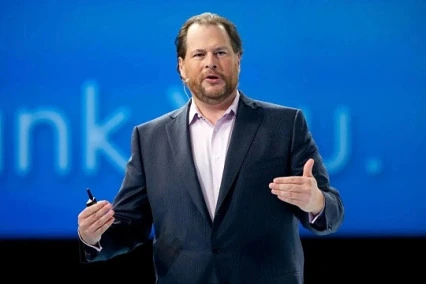 While the government’s move changes official language, the responses from Salesforce and Musk bring the debate further into the commercial world.
For technology companies, a product name is more than a label. It can shape brand identity, market expectations, and how a company positions itself for the future.
“AI” has become a catch-all term across the technology industry, covering everything from foundational models to productivity software. “SI,” on the other hand, more readily evokes advanced intelligent systems and may help companies emphasize their ambitions for the next stage of technological development.
Companies adopting the new terminology may be responding to the changing policy environment, seeking a new market position, or doing both.
However, a rebrand does not necessarily signal a technological breakthrough. Changing AIForce to SIForce, for example, does not prove that the underlying product has achieved superintelligence.
Nor do announcements from a handful of executives mean that the entire technology industry has embraced the new terminology. Whether other major AI companies will follow remains to be seen.
Beyond the Name Change Who Gets to Define the Future of AI?
The more important question is not what AI will be called, but who gets to define its future.
How governments describe a technology can influence policymaking and public understanding. How companies market their products affects consumer perceptions and investor expectations. Meanwhile, the standards developed by researchers determine whether technological progress can be measured and compared accurately.
Promoting “Super Intelligence” as an official term is, in part, an attempt to establish a new narrative around the next phase of technological competition.
But there is a potential problem. Without a clear and measurable definition, super intelligence could become a broad political and commercial label, making it harder for the public to distinguish mature AI applications from systems that genuinely exceed human capabilities.
On the other hand, if clear evaluation standards are developed, the discussion could encourage the industry to take a closer look at intelligence levels, system autonomy, and safety boundaries.
The shift from AI to SI may look like a simple change of two letters, but it touches on the relationship between government policy, corporate branding, and technical standards. Whether companies adopt the new name matters, but what matters more is whether the concept gains wider acceptance and has a solid technical foundation.
Ultimately, whether the technology is called AI or SI, its value will depend on what it can actually do, how reliably it performs, and whether humans can understand and manage the risks it creates.