
The next major shift is coming! The UN warns: AI may exacerbate global wealth inequality.
 B.news

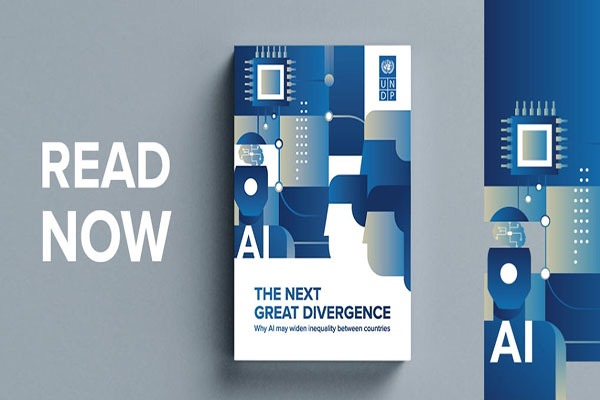
Behind the disruptive impact of artificial intelligence (AI) and the high hopes placed on it to change the world lies a harsh reality: without systemic intervention, this technology could further exacerbate global inequality, reversing trends of the past few decades.
A report released by the United Nations Development Programme (UNDP) on Tuesday points out that if countries do not take steps to leverage AI to bridge gaps in basic living needs and access to advanced knowledge, the majority of AI's benefits are likely to continue to be monopolized by wealthy nations.
The report, titled "The Next Great Divergence: Why AI May Widen Inequality Between Nations," compares the current state of AI development to the "Great Divergence" of the Industrial Revolution: when many Western countries rapidly industrialized while others lagged far behind.
As AI may transform or even replace some human jobs through computers or robots, how businesses and institutions use AI has become a global concern.
However, the report emphasizes that public discussion largely focuses on productivity, competitiveness, and economic growth, while the truly critical question is: what does AI mean for human life?
In many communities, most people are still struggling to access skills, electricity, and internet connectivity. Meanwhile, these individuals are often "invisible" in the data, making it difficult for AI systems to truly consider them.
The report states, "As a general-purpose technology, AI can boost productivity, spawn new industries, and help latecomers catch up."
AI can bring new opportunities to rural areas and regions vulnerable to natural disasters, such as providing more specialized agricultural advice, analyzing X-rays in seconds, making faster medical diagnoses, providing more accurate weather forecasts, and assessing disaster damage.
However, even in high-income countries like the United States, concerns are rising that data centers may consume excessive amounts of electricity and water. Expanding power generation to meet higher energy demands could hinder efforts to reduce carbon emissions and pose health risks.
This technology also raises ethical, privacy, and cybersecurity concerns: researchers have discovered hackers using AI to automate parts of cyberattack processes. Furthermore, deepfakes could be used to mislead the public or facilitate criminal activities.
Further widening the gap
The report points out that Asian economies such as China, Japan, South Korea, and Singapore have a favorable foundation for utilizing AI tools; while countries like Afghanistan, the Maldives, and Myanmar lack the necessary skills, stable power supplies, and resources needed to develop AI. Even within developed economies, regional imbalances could leave some areas lagging behind.
The Asia-Pacific region, home to over 55% of the world's population, is at the heart of AI's transformation. AI is expected to boost the region's annual GDP growth by approximately 2 percentage points, potentially adding nearly $1 trillion to the GDP of ASEAN economies alone over the next decade.
The report states that about a quarter of the Asia-Pacific population still lacks internet access. If these gaps are not bridged, tens of millions could be excluded from digital infrastructure such as smart devices, digital payment systems, digital IDs, education, and skills training, ultimately trapped on the other side of the AI-driven global economy.
UN Assistant Secretary-General Kanni Wignaraja points out that AI is accelerating, but many countries are still lagging behind, and the gap between countries that master AI and those shaped by it is widening rapidly.
Other risks include the proliferation of misinformation and disinformation, privacy violations, and opaque decision-making mechanisms that could perpetuate biases against minority groups. Therefore, transparency and effective regulation are crucial safeguards for ensuring the fair and responsible application of AI.
The report concludes that "AI is becoming the future infrastructure of the region after electricity, roads, and schools, with potential benefits arriving faster and risks higher." Therefore, the report calls on governments to increase investment in improving digital infrastructure, education and training systems, promoting level competition, and strengthening social security.
UNDP economist Philip Schellekens stated that the core dividing line in the AI era lies in the capability gap; countries that can invest in skills, computing power, and robust governance systems will benefit, while others risk being left far behind.